







Reformative Governance in Focus at RIC: Seminar Honours Legacy of Dr. Rakesh Hooja
Chief Secretary V. Srinivas Highlights Rajasthan’s “Maximum Governance – Minimum Government” Model

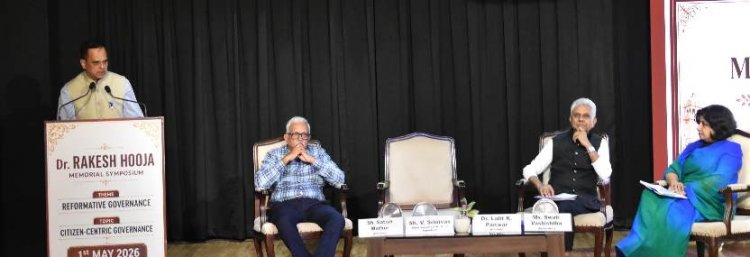
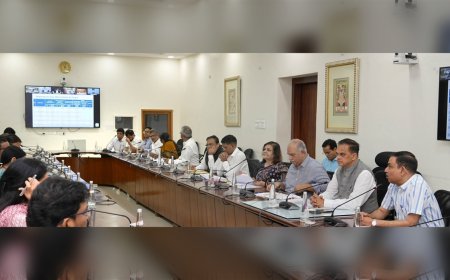
Ananya soch: A thought-provoking seminar on “Reformative Governance” was organized at Rajasthan International Centre (RIC) in memory of eminent academician and administrator Dr. Rakesh Hooja. The event marked its first edition in Jaipur and brought together senior bureaucrats, experts, and thought leaders to deliberate on citizen-centric governance and administrative reforms.
Delivering the keynote address, Rajasthan Chief Secretary V. Srinivas emphasized that the state follows a “Maximum Governance – Minimum Government” model, which reflects administrative efficiency, inclusivity, and responsiveness. He noted that Rajasthan’s vast geographical and cultural diversity—from desert districts to irrigated regions—poses unique governance challenges, yet a strong institutional framework ensures effective administration.
Recalling his association with the late Dr. Rakesh Hooja, Srinivas described him as a distinguished scholar, institution builder, and a deeply committed contributor to Rajasthan’s development. He shared his experiences of working under Dr. Hooja in the Command Area Development Department during 1994–95 and later during his tenure as Director General of HCM RIPA. He highlighted that Dr. Hooja’s legacy continues to inspire generations of administrators through his academic and institutional contributions.
The Chief Secretary further underlined that the Indian Administrative Service in Rajasthan is widely respected for its impartial and balanced decision-making aligned with constitutional values. Stressing ethical governance, he said the vision of an “ethical India” is rooted in the belief: “I am ethical, I am accountable, I am IAS.” He also highlighted the importance of strong institutions and described the role of District Collectors as a model of effective grassroots governance.
Srinivas pointed out that technology has played a transformative role in governance, citing initiatives such as Aadhaar, Direct Benefit Transfer (DBT), UPI, and MGNREGA, which have significantly strengthened service delivery mechanisms. He appreciated the seminar as a timely platform to discuss reforms aligned with the vision of a “Developed Rajasthan” and commended the efforts of Prof. Himangini Hooja in organizing the event.
The seminar also featured an engaging panel discussion with Lalit K. Panwar and Satish Mathur, moderated by senior journalist Swati Vashishtha. The discussion brought diverse perspectives on governance, accountability, and public engagement.
Dr. Panwar emphasized that citizen-centric governance is achievable through participation, transparency, accountability, and accessibility. He urged administrators to adopt a proactive “go-getter” approach rather than a passive attitude. He also highlighted the evolving role of media, noting that social media has become a powerful platform that demands greater caution and responsibility.
Satish Mathur stressed the importance of accessibility and integrity in policing, stating that officers in the field must remain approachable to citizens. He added that impartiality and freedom from corruption help maintain trust even in politically sensitive situations.
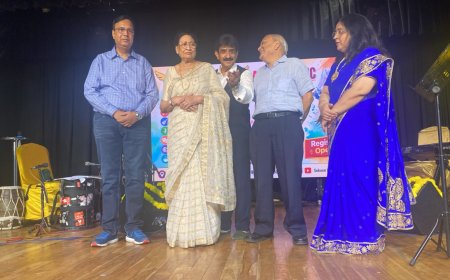
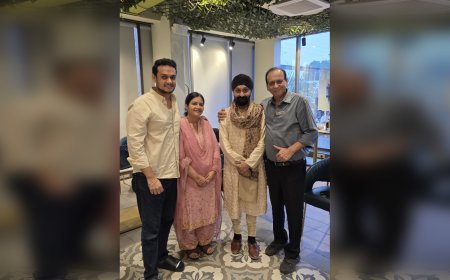
The event concluded with a vote of thanks by Himangini Hooja. Earlier, the keynote speaker and panelists were felicitated by Meenakshi Hooja, Ramesh Arora, Reema Hooja, Rajat Hooja, and Rakshat Hooja. The seminar emerged as a significant platform for meaningful dialogue on governance reforms and public administration in Rajasthan.