From Diesel to Digital Green: Rajasthan Media Delegation Witnesses Chandigarh’s Electric Bus Revolution, Meets Governor Kataria
Courtesy Call with Governor Highlights Dialogue on Governance and Media
 ananya
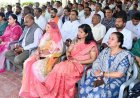
Ananya soch: A senior delegation of editors and reporters from Rajasthan, organized by the Press Information Bureau (PIB) Jaipur, concluded its multi-state study tour across Chandigarh, Punjab, and Haryana with key institutional visits and high-level interactions. During the visit, the delegation paid a courtesy call on Punjab Governor and Administrator of Chandigarh (UT), Gulab Chand Kataria. The interaction focused on the objectives of the media outreach tour and the importance of transparent communication between the government and the press. The Governor appreciated the initiative, emphasizing the constructive role of media in disseminating factual information about development-oriented policies. The visit formed part of an exposure tour aimed at providing journalists with first-hand insights into flagship initiatives of the Government of India and their on-ground implementation.
Inside Chandigarh’s Green Mobility Push: A Close Look at PM e-Bus Sewa
On the final day of the tour, the delegation visited the Chandigarh Transport Department to understand the progress of the PM e-Bus Sewa, a flagship urban mobility initiative of the Ministry of Housing and Urban Affairs. Officials informed the delegation that 428 electric buses have been sanctioned for Chandigarh under the scheme. Until recently, 80 electric buses were operational in the city. With the addition of 25 new buses, the fleet strength has increased to 105. The remaining buses will be inducted in a phased manner during 2026.
The newly inducted 12-metre low-floor, air-conditioned electric buses can travel approximately 224 kilometers on a single charge. Designed and manufactured in India for intra-city operations, these buses are tailored for modern urban commuting needs.
Smart, Safe, and Inclusive: Features of the New Electric Fleet
The buses are equipped with a 400 mm low-floor design for easy boarding and deboarding, including a power-operated ramp for Divyang passengers and dedicated wheelchair space. Each bus has seating capacity for 36 passengers and standing space for 20.
Advanced features include air suspension, front disc brakes, passenger information display systems, and voice-based next-stop announcements.
From a safety standpoint, the buses are fitted with CCTV cameras covering passenger areas, driver behavior, reverse view, and dashboard footage. They also comply with AIS-140 GPS standards and are connected to the State Transport Authority’s Command and Control Centre. Panic buttons and stop-request systems further enhance passenger safety and convenience.
The fleet is being operated by Chandigarh Transport Undertaking under the Chandigarh City Bus Services Society (CCBSS).
Charging Infrastructure and Smart Monitoring
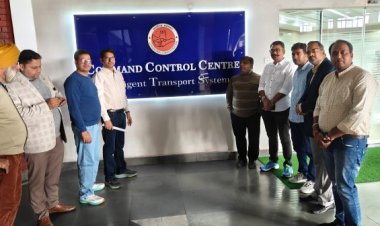
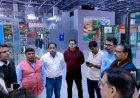
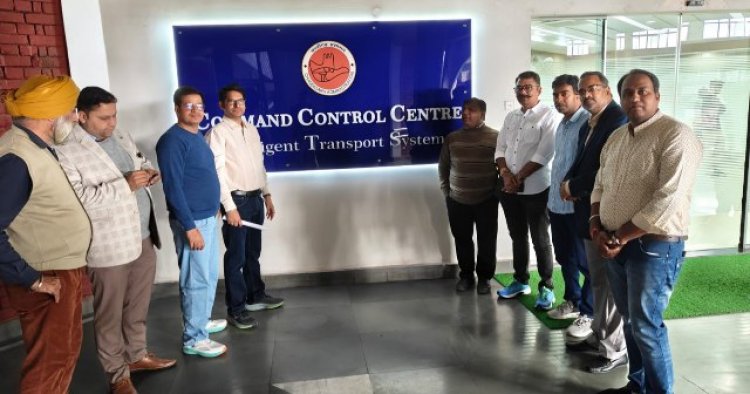
Officials explained that depot-based CCS2 fast-charging systems have been installed. Overnight scheduled charging ensures operational efficiency, with full charging taking approximately 2–3 hours depending on battery status.Smart load management systems optimize electricity demand, while strict compliance with fire, electrical, and earthing safety standards has been ensured. Battery health monitoring, thermal management systems, and remote diagnostics-based preventive and predictive maintenance are also in place. Dedicated engineers and technical teams stationed at depots ensure high operational availability.The delegation also visited the Intelligent Transport System (ITS) Control Room, where real-time monitoring of city bus operations is carried out. Digital dashboards track routes, fleet movement, and passenger services online.
Target 2027–28: Fully Electric Tri-City Fleet
Officials stated that the Chandigarh Administration is committed to replacing all diesel buses in the tri-city region with electric buses by 2027–28. An additional 70 buses will be inducted, taking the total fleet size to 508 electric buses.This large-scale transition is expected to significantly reduce carbon emissions, curb noise pollution, and contribute to a cleaner, greener urban ecosystem. The move aligns with India’s broader climate commitments and sustainable urban mobility goals.The first phase of electric buses in Chandigarh was inaugurated on February 14, 2026, by Prime Minister Narendra Modi, marking a major milestone in the city’s public transport transformation.
Media Interaction at Chandigarh Press Club
During the tour, the Rajasthan delegation also visited the Chandigarh Press Club and engaged in discussions with local journalists. The exchange of perspectives focused on evolving newsroom practices, policy reporting, and the growing importance of field-based journalism.The delegation described the study tour as insightful and informative, stating that witnessing the implementation of national schemes at the grassroots level enhances credible and fact-based reporting.
A Model for Urban India
The Chandigarh visit highlighted how technology-driven governance, clean energy transition, and administrative commitment can reshape urban mobility. The PM e-Bus Sewa initiative, as observed by the visiting journalists, stands as a scalable model for other Indian cities aiming for sustainable and citizen-friendly public transport. The tour concluded with a broader understanding of how coordinated policy implementation across Chandigarh, Punjab, and Haryana is translating into tangible benefits for citizens.